On this page
A baseball simulation as good as MLB The Show cannot add much to excite its player base. But there are ways to do it.
Little Sizzle, Some Stakes
It ought to be acknowledged up front: It is very difficult to add something new to or revamp something old in a sports simulation video game that is worthy of headlining a gameplay trailer or being the top bullet point on the back of the box — sports video games being among the few that remain exceedingly popular as physical purchases in Target and Walmart, these do still matter — in 2026. MLB The Show 26 will be the 21st edition of the series under the MLB The Show branding, and the 31st game in the MLB series of games published by Sony since MLB Pennant Race was released for the PlayStation in 1996.
There have been 22 Call of Duty games. At the release of Avengers: Endgame, there had been 22 Marvel Cinematic Universe films. The Simpsons, which has been decried as being well past its prime for decades now, began airing its 22nd season in 2010; South Park, which has increasingly shrunk its output — and never released a season with more than 18 episodes, significantly fewer than even animated TV comedies generally release in a given year — released its 23rd and seemingly final "full" season of 10 episodes in 2019, with a total of 31 episodes comprising the five "seasons" and specials since then.
Any of these venerable institutions could be rightly criticized for relying on what has worked for decades of widely liked — and usually wildly profitable — production of mass-market products, especially when a "sizzle reel" doesn't do much to move the needle. But Call of Duty can go to different theaters and draft off Fortnite with its own battle royale mode in a way that a baseball sim cannot. The MCU could stretch a story spanning three "Phases" into a decade-long "Saga" because Disney could spend trillions of dollars on actors, directors, animators, advertising, and so on to make trillions of dollars on Marvel's intellectual property that had largely not been adapted to film — an advantage of novelty that the 30th baseball video game a player may have played in her lifetime. And while MLB The Show is annually criticized for "looking the same" as it did in previous iterations — which, to be fair, is also a complaint lodged at Out of the Park Baseball, a pure baseball strategy sim that is 90 percent menu management — no one watches an episode of The Simpsons or South Park from the same lens: The style there is a strength for its familiarity and comfort.
So MLB The Show rolling out trailers reflecting efforts to refine rather than revolutionize its games will always be met with familiar criticisms from players and observers who are probably not even the intended audience for that marketing, having already sorted themselves into likely buyers — actual stakeholders in a game's community, who have an interest in its quality — who complain about games because they have no other choice or unlikely buyers — those who would wield stakes to kill the vampires they believe in — who can lob their assessments from a remove and do not even carry the expectation of accuracy or fairness when making critiques.
It's not a particularly fair position for game developers and publishers to be in. But they do have to know that's where they are.
How to Heat the Stove
What can Sony San Diego — and Sony, more generally — do to combat these traps of expectations? I think there are two primary paths: Capitalizing on clear opportunities and clear, consistent communication.
The former ought to revolve around a handful of things that should be as obvious to Sony as to the MLB The Show player base.
- Special, widely-known events in baseball — like this year's World Baseball Classic or the return of baseball to the (Los Angeles-based) Olympics in 2028.
- Annual opportunities to celebrate some of the great achievements or careers in baseball, like Hall of Fame classes, postseasons, or awards.
- The ongoing extraordinary careers of potential all-time greats, like Shohei Ohtani and Aaron Judge.
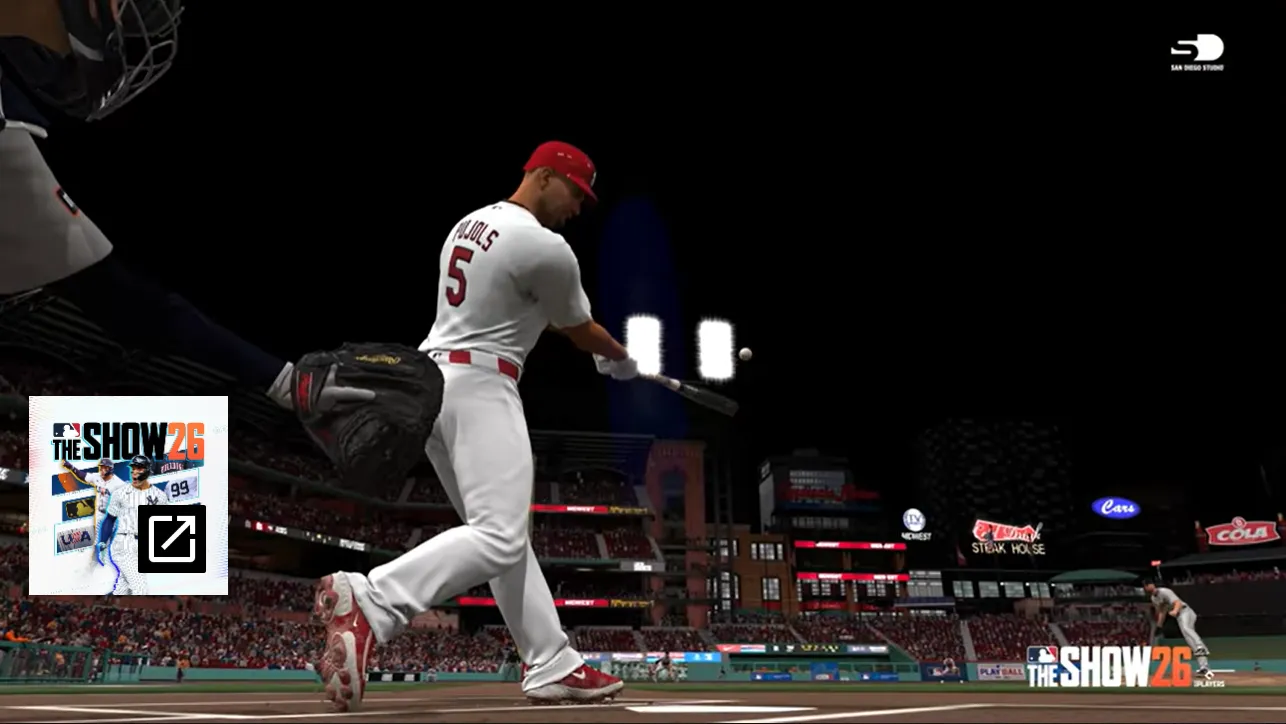
To begin with the last point, it certainly cannot be argued that MLB The Show is unaware of the opportunities presented by Ohtani and Judge. Judge is this year's cover athlete despite a tradition of choosing a new one for each year, and Ohtani's two-way greatness has been so undeniable that developers have had to restructure the game to allow for Ohtani avatars to throw and hit and for players to chase his accomplishments in other modes, something that has required significant effort and had unintended side effects (like, for example, the indefatigable John Donaldson in Diamond Dynasty). Judge and Ohtani are rightly cast as demigods in multiple modes in The Show, with sky-high ratings in the base game and rarefied status in DD, and yet are still attainable enough to be toys that can be touched, something that cannot be said for representations of both — and especially Ohtani — in the collectibles market.
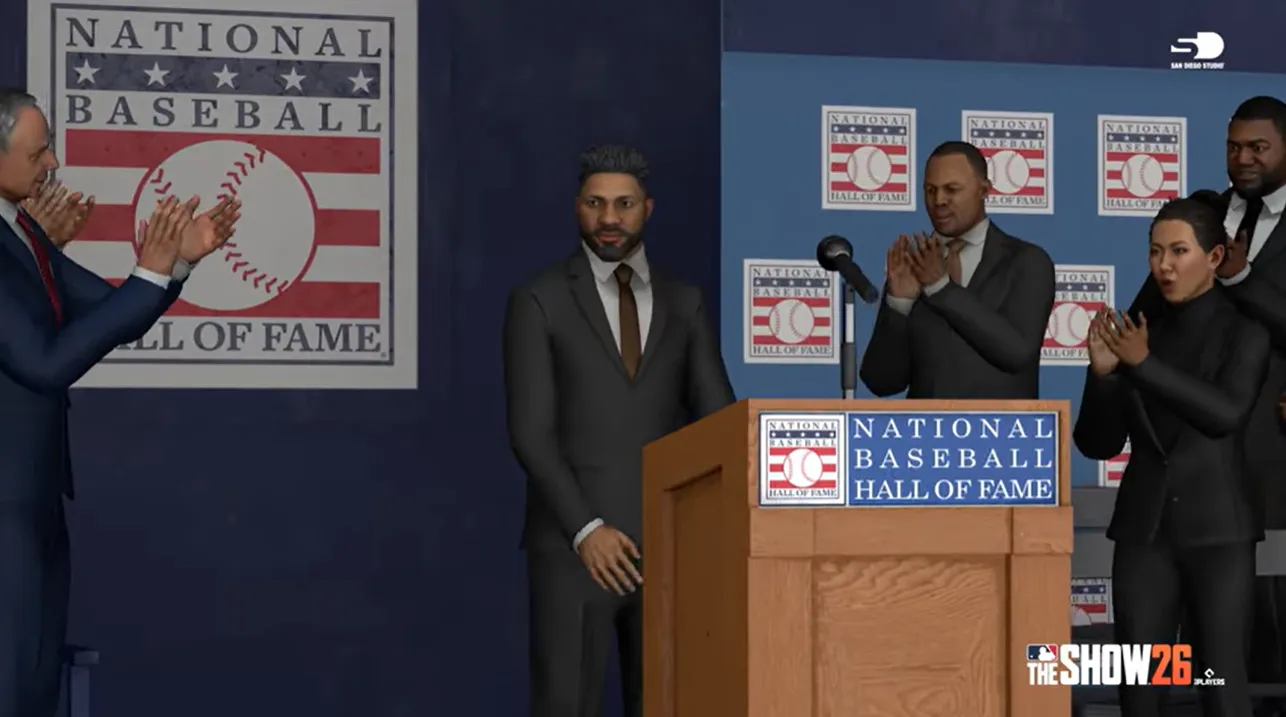
But it is equally clear that MLB The Show does not make the most of its licensing of the Baseball Hall of Fame. While this year's Road to Cooperstown focus of Road to the Show is nice, it arguably could and should have been the logical endpoint of RTTS careers for many previous years, and while giving players the ability to make their avatars Hall-worthy with granular control is appealing, it would probably be better-received to make sure the real-life players who are entering the Hall of Fame are represented in game. Adding Carlos Beltran to MLB The Show a year ago could have been better maximized if done this year, and in conjunction with Andruw Jones and Jeff Kent also being inducted; creating the expectation that recently retired players who have not perennially been playable in DD are locks to be represented on virtual diamonds when they are immortalized in Cooperstown would be a strong way of producing a reliable expectation for the player base that can be reliably met — hint to Sony: everyone has a price — by the development team. (Adding the true white whales and holy grails — Barry Bonds, Alex Rodriguez, Ichiro, Joe DiMaggio, and other inner-tier Hall of Famers — to DD would also be shots in the arm in terms of hype, obviously — but as or more expensive than committing to bringing in Hall of Famers circa their inductions.)
And the precious breakthrough moments that baseball has in popular culture, like the World Baseball Classic or the College World Series, absolutely must be the centerpieces of MLB The Show when they occur. The College World Series should be a standalone mode, right out of the box, preferably with at least a sprinkling of some licensed players who will represent their schools in the 2026 season and who could sign NIL deals to appear in the game; that it almost certainly is not, and is merely a feature of Road to the Show, is a mistake and a missed opportunity. (And how about getting those collegiate teams' uniforms in Diamond Dynasty?)
But the WBC is a much bigger deal. And while some WBC integration will be available in MLB The Show 26, there are still more questions than answers about its presence and playability — just over two weeks from its first pitch, which will also come before the release of MLB The Show 26 — in this year's game. Answering them via Twitch reply and relying on scrying of website copy is also far from ideal.
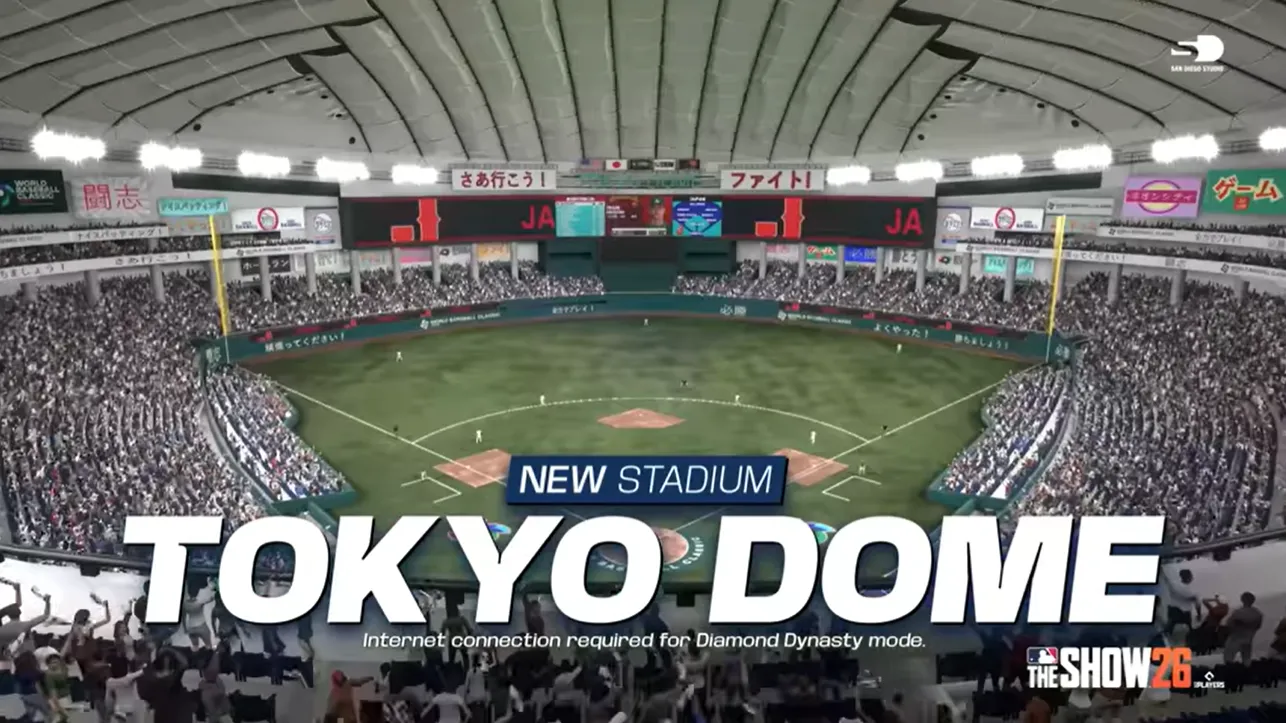
In my opinion, there was a better way clearly available to Sony San Diego. What would have been far more exciting than the rollout we've gotten, with all of the same information being disseminated to the public, is turning the WBC's presence in MLB The Show 26 into the core of the offseason messaging. Dropping regular short-form videos on social media revealing facets of its integration — the licensing of all participating national federations, the recreation of the Tokyo Dome in game, a WBC tournament being playable in Diamond Dynasty, even Judge as the cover athlete (could the last of these videos have focused on Ohtani pitching in a pressurized situation akin to the one he faced against Mike Trout in the last WBC, but with a cut to Judge wearing his United States uniform?) — could have still built up to a fuller gameplay reveal trailer without cannibalizing all of the hype for the World Baseball Classic being in the game, turning something that should have been expected into content that can also be celebrated.
While that would have required some more meticulous planning and a commitment to not saving up the reveals regarding the WBC for a final trailer, I think it could have created a framework in which smaller details fleshed out a fuller picture of how players can enjoy a special moment for baseball with a specific mode in MLB The Show. And, at minimum, it would probably have forced Sony San Diego to communicate exactly how the WBC will be playable well before launch, both blowing up any possibility of a bait-and-switch and/or alerting the studio to the idea that siloing WBC content within Diamond Dynasty alone would be extremely poorly-received.
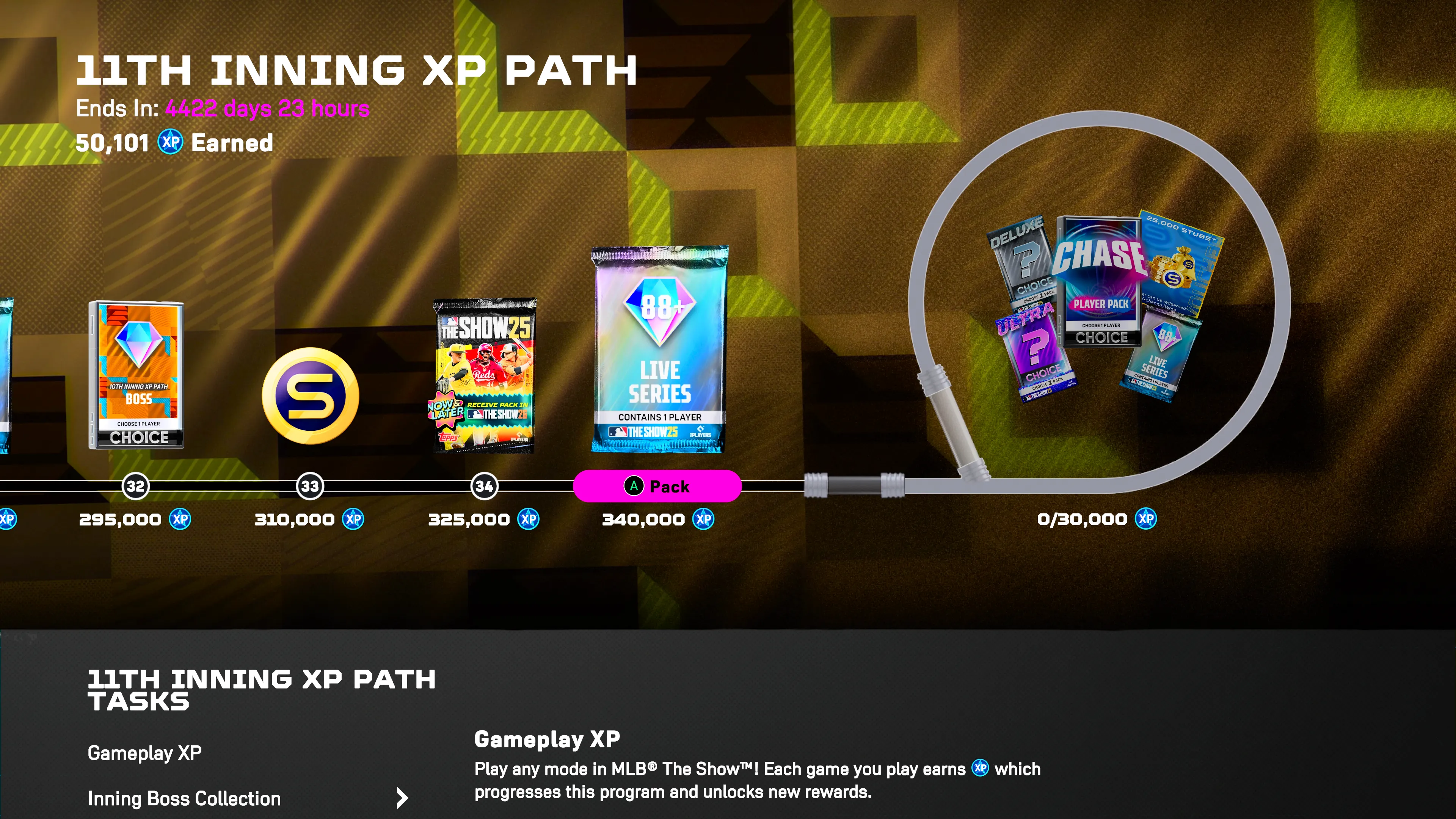
That also speaks to the benefits — and drawbacks — of something that Sony San Diego has foregone in this and most offseasons: Being present in the community even at a time when content is not consistently being churned. The last "content stream" revealing Diamond Dynasty content for MLB The Show 26 was in November; as content in game has been reduced to smaller and less exciting releases — the Captain Blizzard, some holiday-themed Diamond Quest and Conquest maps, and the Now & Later program — there has also been no live touching of base with the community, not even via something as simple as a Twitch stream featuring a trusted employee playing the Diamond Quest while chatting with players or trying to hack it in the competitive Weekend Classic mode.
Want to combat accusations that you're not listening, that you're out of touch, and that you're making the same game every year? Listen, touch, and talk about how you're changing the game — even if it's as simple as spending an hour in conversation with a streamer or content creator in the community while just playing the game, then releasing one of those snack-sized reveals at the end of the stream. And if you need to increase the numbers or encourage community interaction for a stream like that, make a couple of Now & Later packs the prize for watchers swinging by.
Hype Does Not Require Reinvention — Just Reignition
I consider myself both a typical sports gamer and an atypical player of sports games as they exist today. Doing this writing about MLB The Show — and my own stubborn adherence to the idea of fairness — requires me to make my critiques longer and more circumspect of what I want, what I see other players wanting, and what I believe to be possible for developers, which I think in turn makes these critiques at least a bit more legible than strongly-worded tweets and obviously renders them in a format different than a YouTube or TikTok video. Playing almost all of the major sports games that are released in a given year — I bought all of MLB The Show 25, College Football 25, Madden 25, EA FC 25, NBA 2K25, NHL 25, and my Xbox confirms that my playtime for each was best measured in days, not hours — is something I have done since childhood, when it was a lot more affordable since I wasn't buying all of the damn things myself.
But I also buy games on sale and don't spend much, if any, money in the team-building modes; I cannot recall ever having bought Stubs except through preordering The Show, and suspect most of what I've spent in other games has come from the currency that comes with preorders. I play online only very sparingly these days, preferring solitary pursuits of goals and the ability to control my own time to sweating it out against other humans. And, this cycle, I've gravitated really strongly to NHL 26 over every other game despite picking it up a while after release, my Florida Panthers mostly providing the cover athlete and not the championship-level play of their prior two seasons, and my feeling that it has fallen into stagnation. I'm just into hockey right now!
Those priors all lead to me not being all that worked up about how exciting MLB The Show 26 feels to me personally a month before its release. Barring personal tragedy, I am going to buy it — probably preordering it — and I am going to play it consistently over a period of several months. I will like some of the decisions made in making it more than others, and I will enjoy some of the content rolled out in Diamond Dynasty and find some of it boring.
But if I were trying to sell that game to an audience of people both more prone to imbibe hype and more skeptical about whether it would be worth their hard-earned money than I am, I would do what I could to make the exciting things more exciting and communicate about that with consistency.